
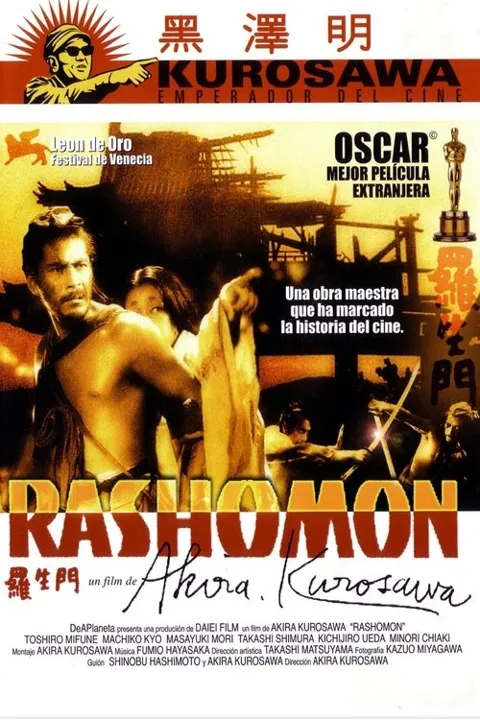
Rashomon
| Director | Akira Kurosawa |
| Writer | Ryūnosuke Akutagawa, Akira Kurosawa, Shinobu Hashimoto |
| Cinematography | Kazuo Miyagawa |
| Music | Fumio Hayasaka |
| Cast | Toshirō Mifune, Machiko Kyô, Masayuki Mori, Takashi Shimura, Minoru Chiaki |
Sheltering from the rain in the ruined Rashōmon gate, a woodcutter and a priest tell a commoner about the trial over a samurai's death in the forest. The bandit, the wife, the dead man's spirit and a witness give incompatible accounts of the same crime.
| Copy | Complete · 88 of 88 min |
| Quality | HD |
| Version | Japanese · No subtitles |
| Checked | 08/24/2026 |
Pros
- Golden Lion at Venice and an honorary Oscar: the first Japanese film to make a major international impact.
- It gave its name to the "Rashomon effect": one event told by several witnesses in contradictory versions.
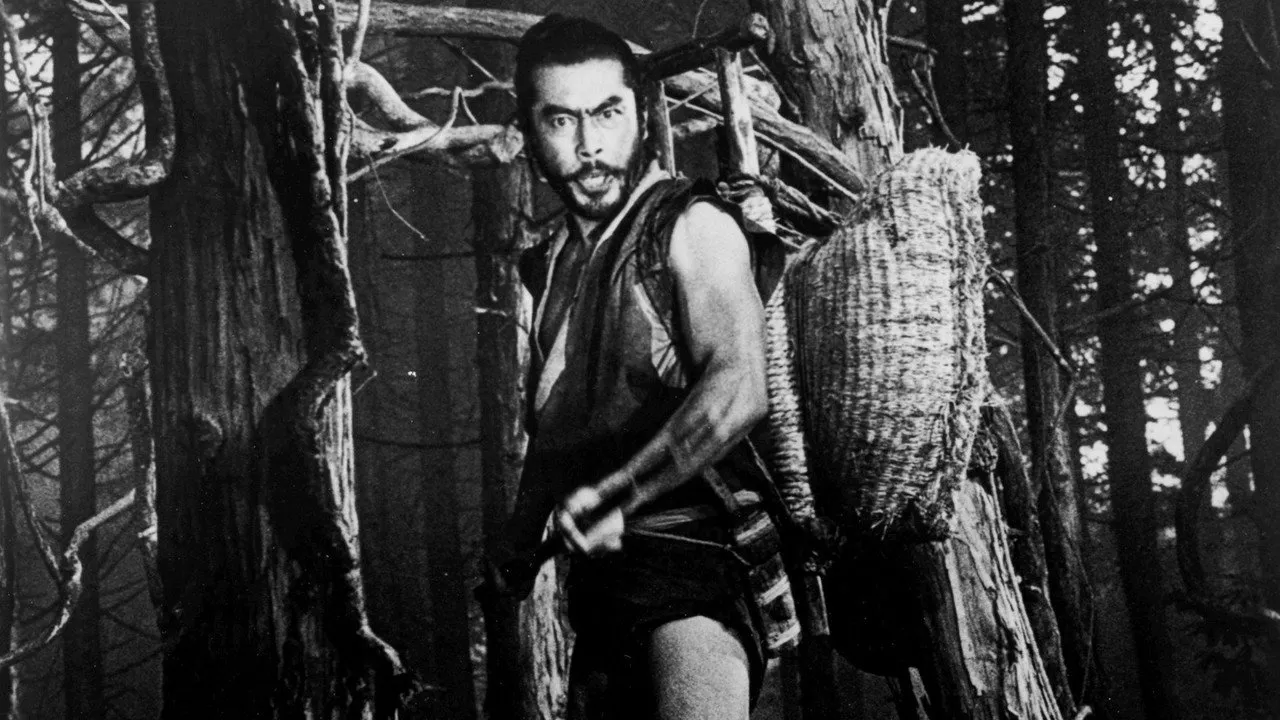
- Kazuo Miyagawa shot pointing the camera straight at the sun, then considered taboo.
- 98% on Rotten Tomatoes and tenth in Sight & Sound's 1992 directors' poll.
Cons
- Japanese critics were divided and faulted its complexity.
- Daiei's president, Masaichi Nagata, said he didn't understand it.
- Its score, very close to Ravel's Boléro, led to accusations of plagiarism.
- Its structure of retold stories demands attention and offers no tidy answers.
What the critics said
«Much of the power of the picture—and it unquestionably has hypnotic power—derives from the brilliance with which the camera of Director Akira Kurosawa has been used.»
Bosley Crowther · The New York Times, 1951 · Source ↗
Western critics were won over above all by the cinematography.
«An exciting evening, because the direction, the photography and the performances will jar open your eyes.»
Ed Sullivan · Hollywood Citizen-News · Source ↗
The popular host also praised Mifune's "magnificent" Tajōmaru.
«Its insufficient plan for visualizing the style of the original stories»
Tadashi Iijima · Source ↗
An example of the cool reception in Japan, focused on the Akutagawa adaptation.
«I don't really get it, but it's a noble photograph.»
Masaichi Nagata · presidente de Daiei · Source ↗
The producer's own reaction; he later took credit for its international success.
Famous quotes
«If men lie in this world, what makes you so sure they'll be honest in the next?»
The commoner · PlayPhrase ↗ · QuoDB ↗
«We all want to forget something, so we tell stories. It's easier that way.»
The commoner · PlayPhrase ↗ · QuoDB ↗
«A human life is truly as frail and fleeting as the morning dew.»
The priest · PlayPhrase ↗ · QuoDB ↗
«Dead men tell no lies.»
The priest · PlayPhrase ↗ · QuoDB ↗
«If it hadn't been for that wind, I wouldn't have killed him.»
Tajōmaru · PlayPhrase ↗ · QuoDB ↗
Quotes: Wikiquote (CC BY-SA)
Famous scenes
Three men shelter from a downpour in the ruins of Rashōmon and begin to tell the story.
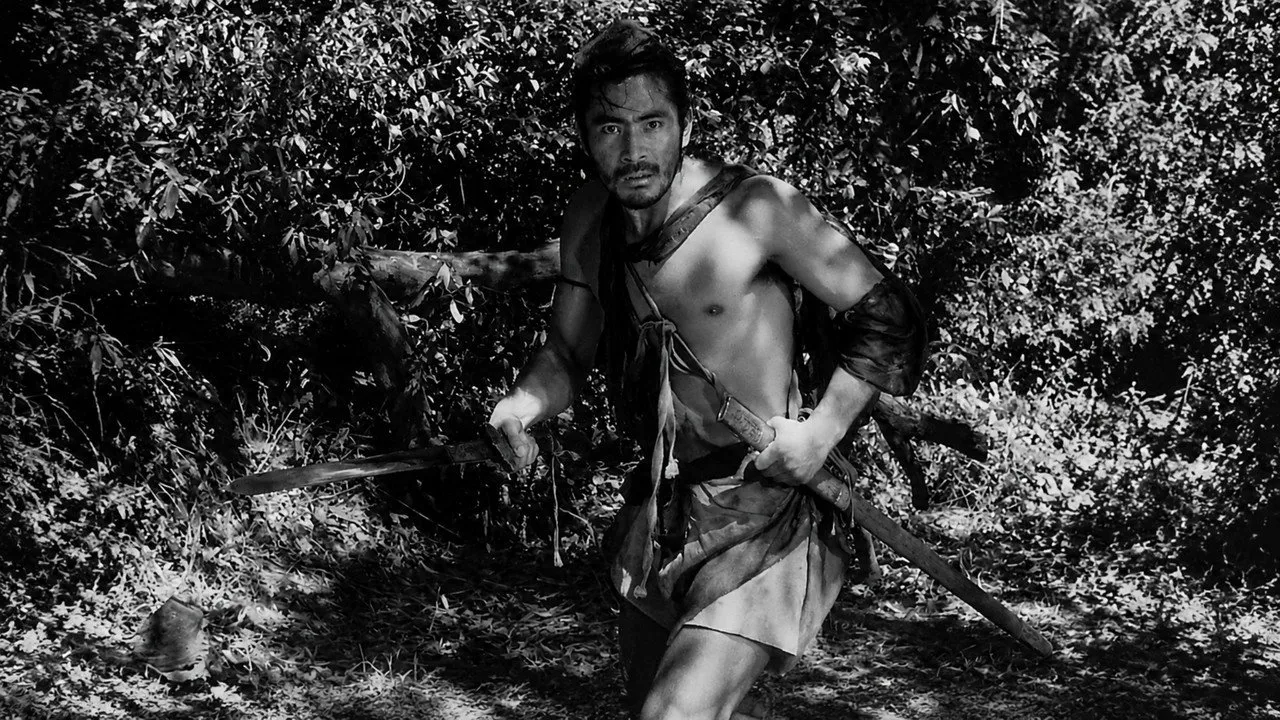
The woodcutter walks through the forest in dappled light, achieved with eight mirrors reflecting sunlight.
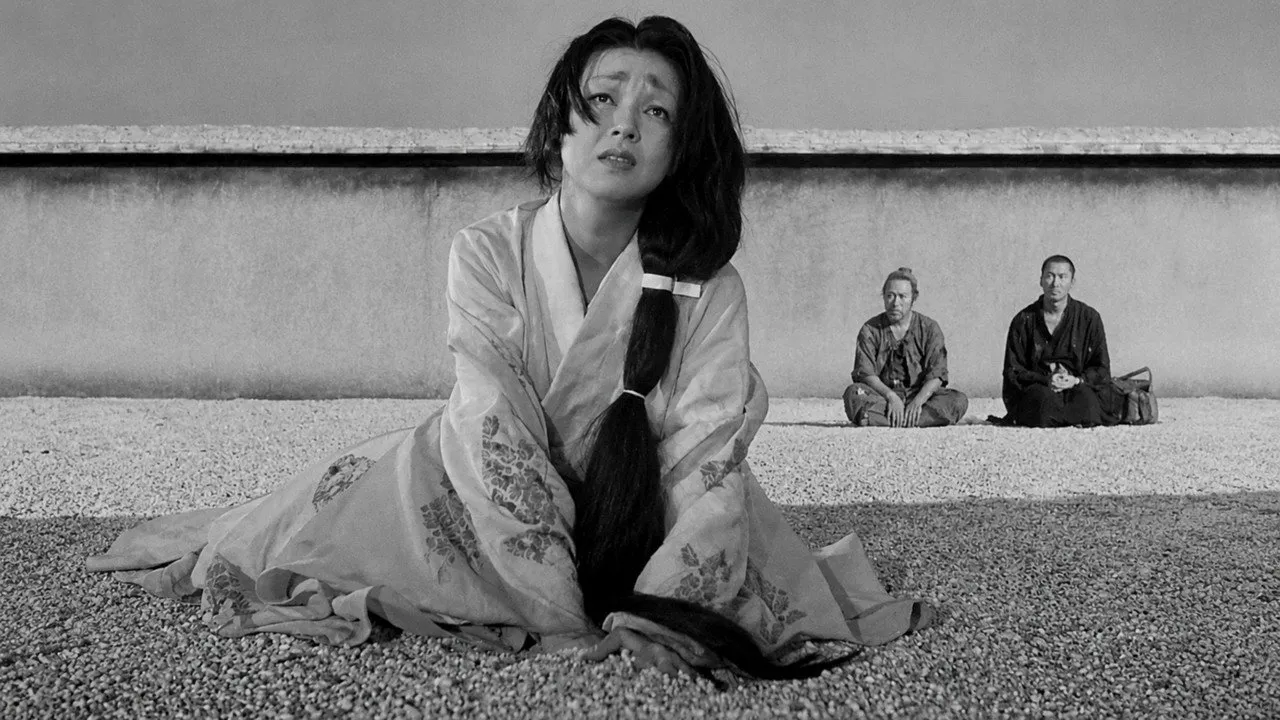
Her account of the crime is set to bolero-like music, written at Kurosawa's request.
At the end, the woodcutter takes an abandoned baby home and the rain stops.
Gallery
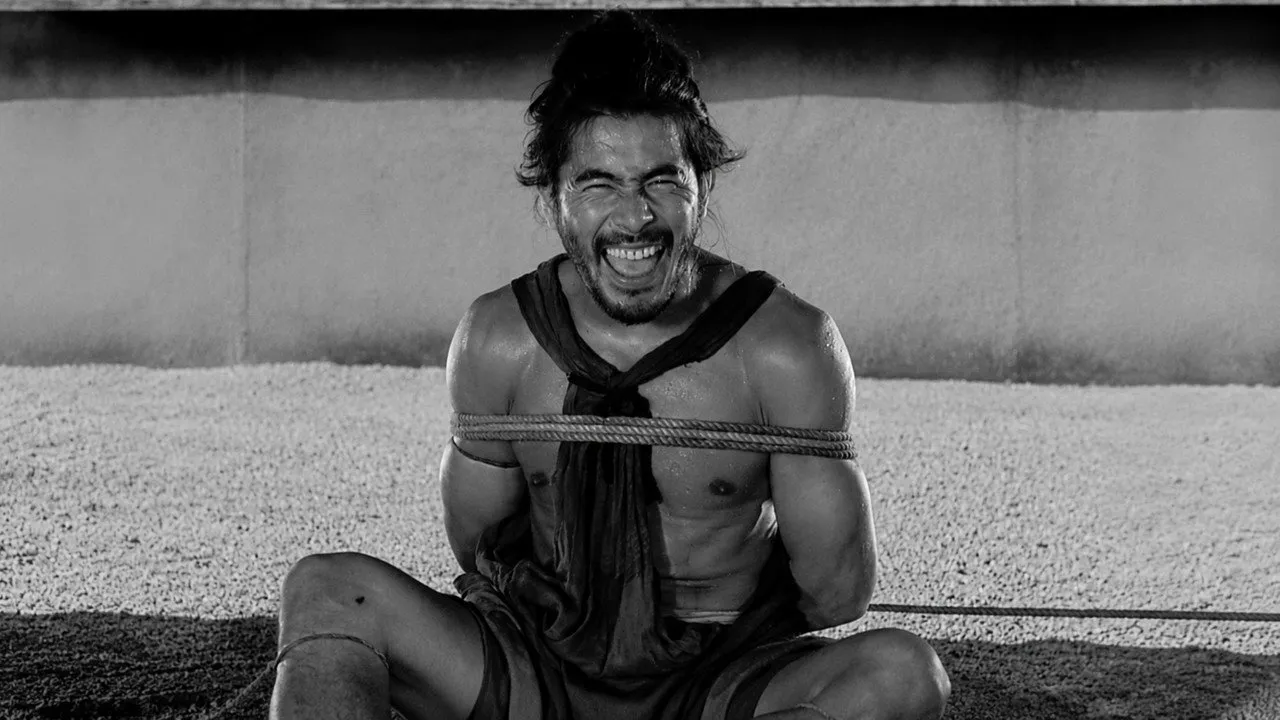
Stills: TMDb
True or false?
Japanese critics received the film enthusiastically before its Venice triumph.
Connections in the catalog
In the great lists
| Sight & Sound · directors' poll (1992) | 10th |
| The Village Voice · 100 greatest films (2000) | 10th |
| National Society of Film Critics · 100 essential films (2002) | Included |
Awards
| Golden Lion | 1951 |
| Academy Honorary Award |
Budget and box office
| Budget (1950) | $140,000 |
| Today's equivalent | ≈ $1.9 million |
| Box office | About $800,000 outside Japan |
Adjusted for inflation using the US CPI
Technical details and shooting
| Image | Black and white |
| Languages | Japanese |
| Shooting | 7 July to 17 August 1950, mainly in Kyoto |
| Budget | ¥15–20 million (estimated) |
| Cinematography | Kazuo Miyagawa: camera aimed at the sun and eight mirrors to light the forest naturally |
| Music | Fumio Hayasaka; the bolero in the wife's story caused controversy for its likeness to Ravel |
Script and source material
| Based on | Ryūnosuke Akutagawa's short stories "In a Grove" and "Rashōmon" |
Wikipedia (EN) · Wikipedia (ES) · Wikiquote · Wikidata · IMDb · TMDb
Analysis prepared with AI assistance from these sources. Quotes are checked word for word against the original text. How we build these pages →