
Drunken Angel
| Director | Akira Kurosawa |
| Writer | Keinosuke Uekusa, Akira Kurosawa |
| Cinematography | Takeo Itô |
| Music | Fumio Hayasaka |
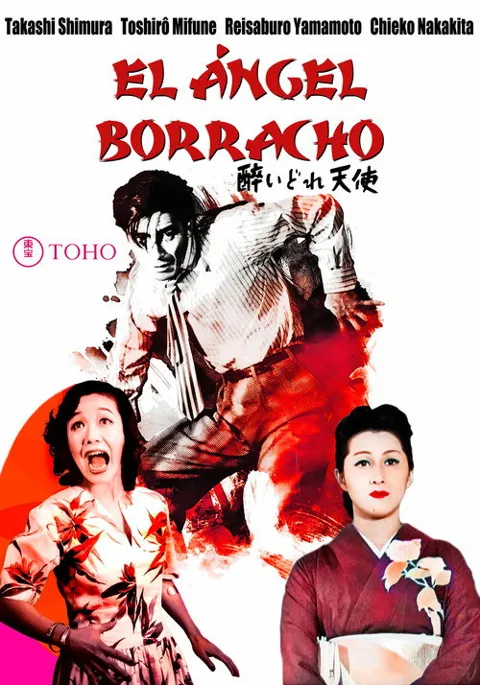
| Cast | Takashi Shimura, Toshirō Mifune, Reizaburō Yamamoto, Michiyo Kogure, Chieko Nakakita |
Sanada, an alcoholic doctor living by a fetid sump, treats Matsunaga, a young yakuza with a bullet wound, and diagnoses him with tuberculosis. As he tries to get him to take care of himself, Matsunaga loses his place in the gang.
| Copy | Complete · 98 of 102 min |
| Quality | HD |
| Version | Japanese · No subtitles |
| Checked | 08/24/2026 |
Pros
- Regarded as Akira Kurosawa's first major work and the first film about post-war yakuza.
- The first of sixteen Kurosawa-Mifune collaborations; Mifune's intensity surprised audiences.
- Best Film of the year for Kinema Junpo and Mainichi Shimbun; 94% on Rotten Tomatoes.
- Takashi Shimura as the alcoholic doctor trying to save his patient.
Cons
- Kurosawa himself admitted an imbalance: Mifune overshadows Shimura, who was meant to be the moral centre.
- Some critics at the time felt it didn't condemn the yakuza world enough.
What the critics said
Famous scenes
Sanada treats Matsunaga's bullet wound and tells him he has tuberculosis; the yakuza's violent reaction is cut short by the nurse's arrival.
The neighbourhood's open sump recurs again and again as a symbol of the surrounding corruption.
By the sump, Matsunaga has a vision of his own corpse trying to kill him.
Gallery
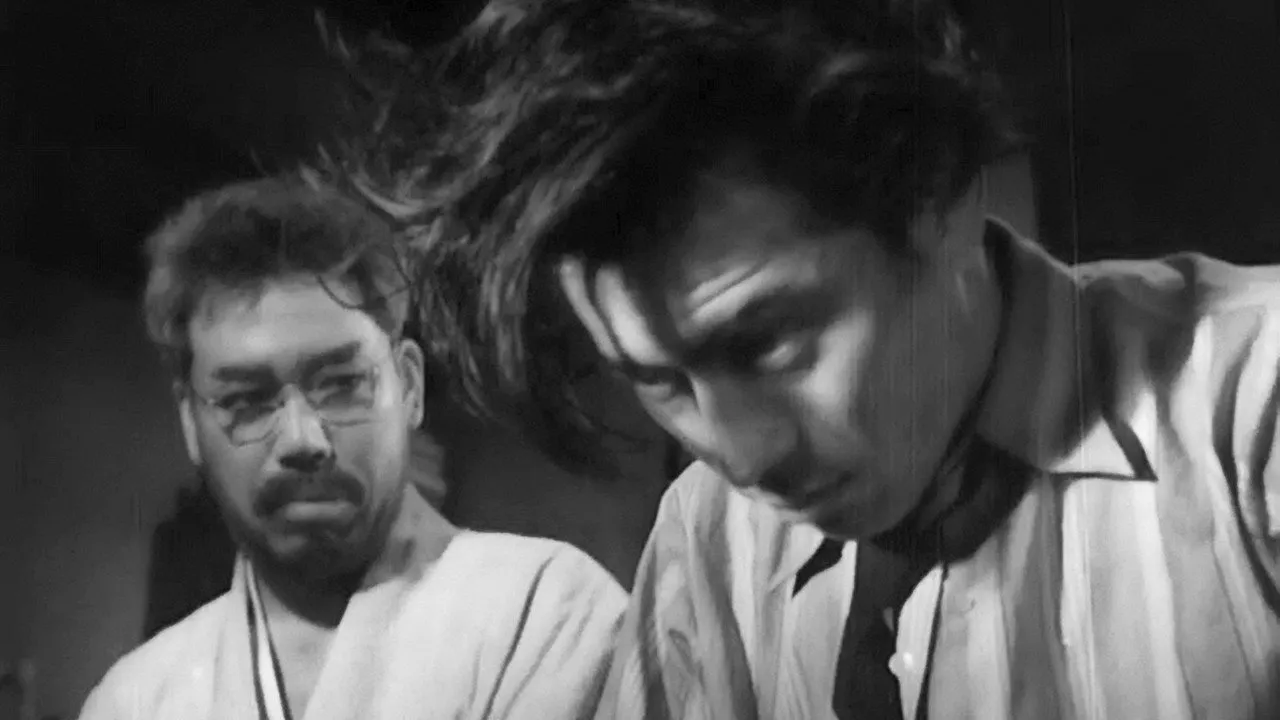
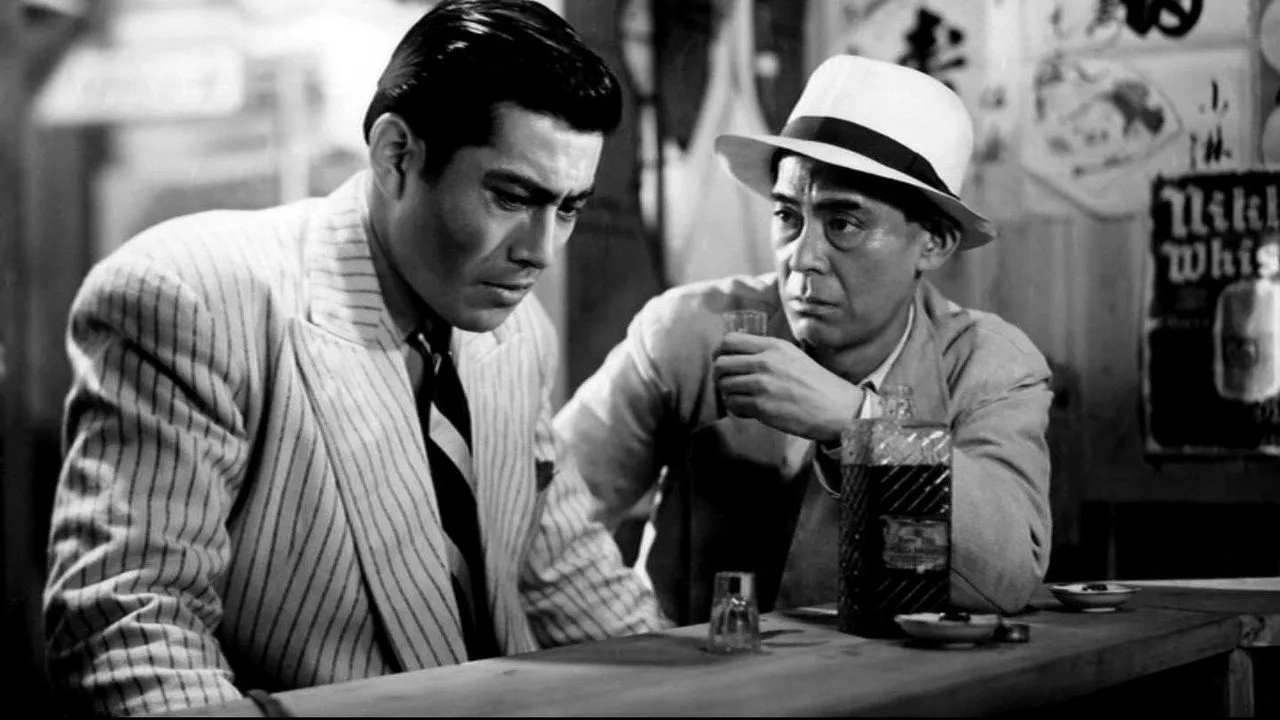
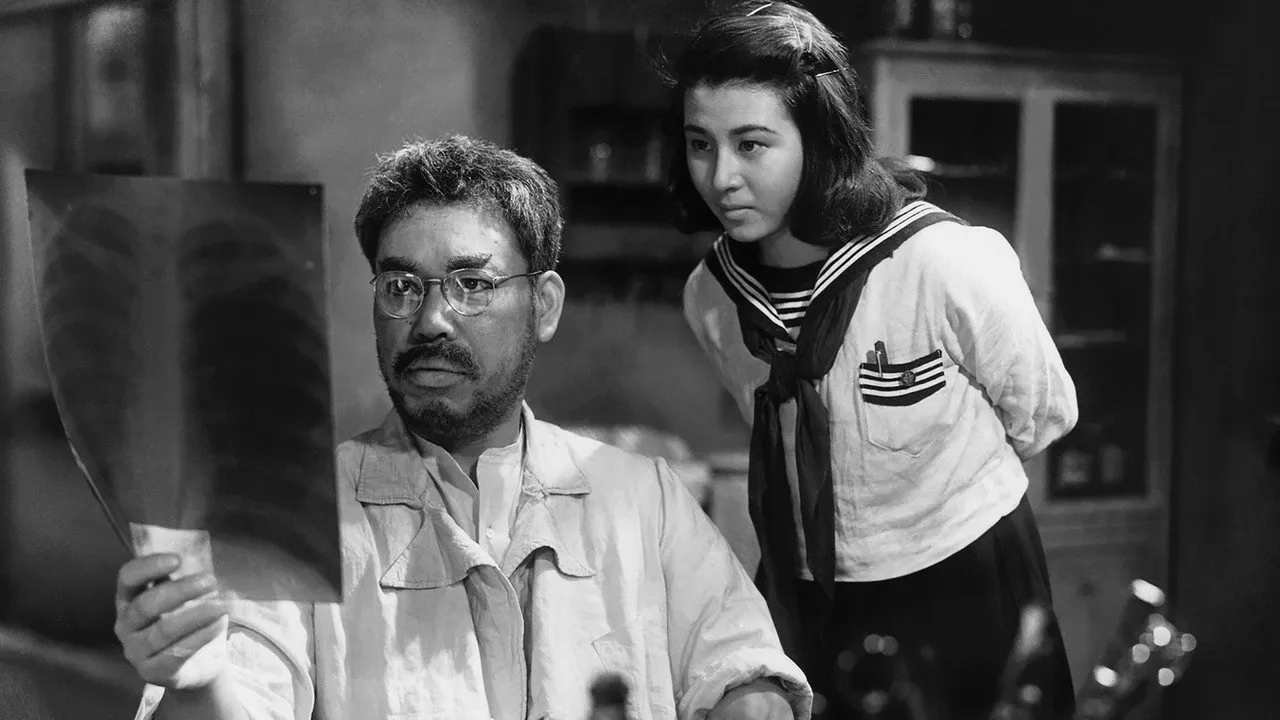
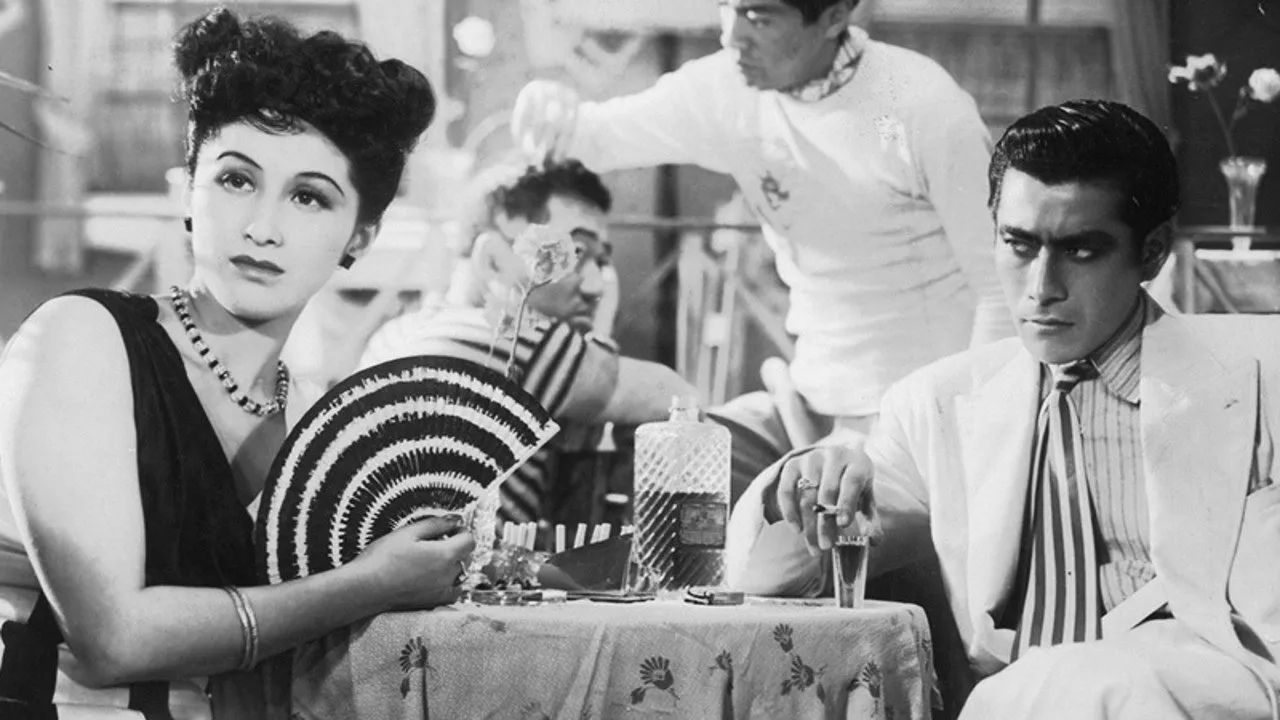
Stills: TMDb
True or false?
It was Kurosawa's first film with music by Fumio Hayasaka.
Connections in the catalog
Awards
| Kinema Junpo Best Film | |
| Mainichi Film Award for Best Film |
Technical details and shooting
| Image | Black and white |
| Languages | Japanese |
| Shooting | November 1947 to 10 March 1948, amid labour disputes at Toho |
| Music | Fumio Hayasaka |
| Censorship | Censored by the Allied occupation government |
Wikipedia (EN) · Wikipedia (ES) · Wikidata · IMDb · TMDb
Analysis prepared with AI assistance from these sources. Quotes are checked word for word against the original text. How we build these pages →