
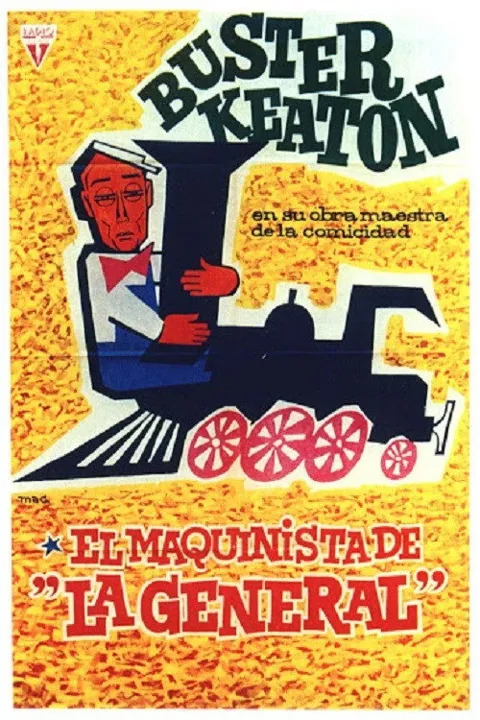
The General
| Director | Clyde Bruckman, Buster Keaton |
| Writer | Buster Keaton, Clyde Bruckman, Al Boasberg |
| Cinematography | Bert Haines, Devereaux Jennings |
| Music | The Alloy Orchestra, Carl Davis |
| Cast | Buster Keaton, Marion Mack, Glen Cavender, Jim Farley, Frederick Vroom |
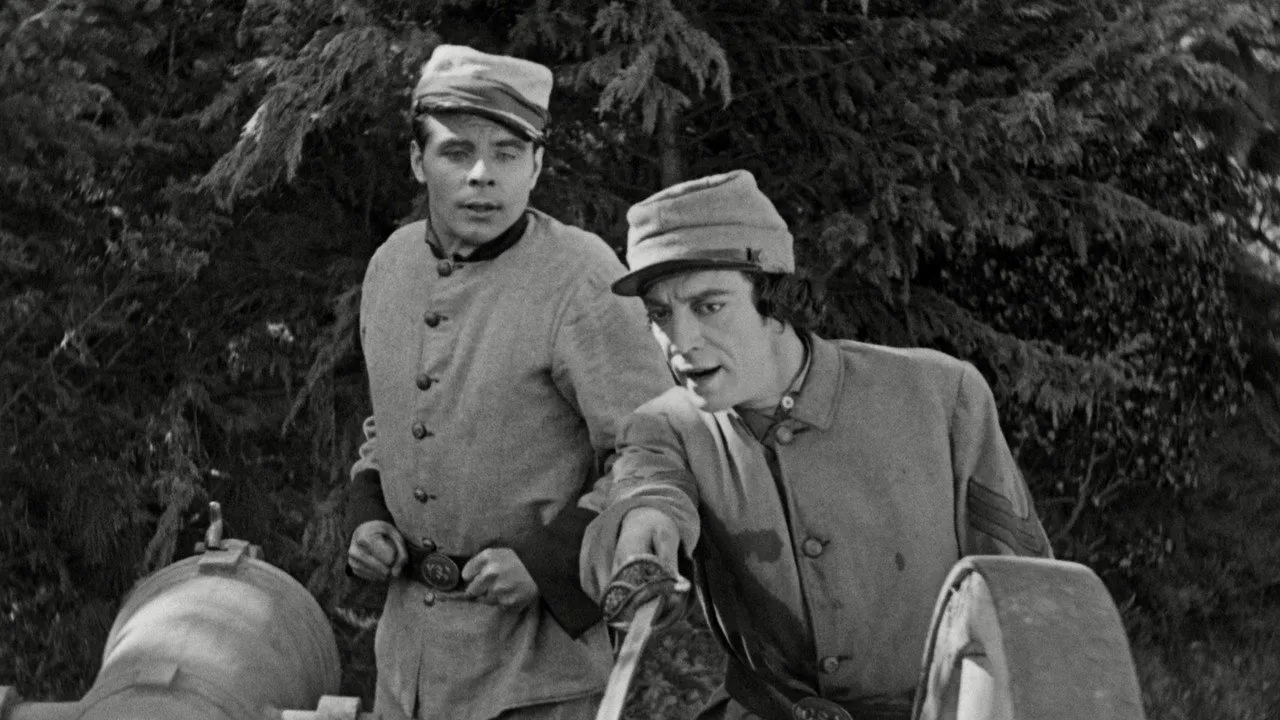
During the Civil War, Johnnie Gray, a Southern engineer turned down by the army, sees Union spies steal his locomotive, The General, with his sweetheart Annabelle on board. Alone, he sets off in a train chase to get both back.
| Copy | Complete · 79 of 78 min |
| Quality | HD |
| Version | English · No subtitles |
| Checked | 08/24/2026 |
Pros
- Orson Welles called it the greatest comedy ever made and perhaps the greatest film ever made.
- The bridge collapse with a real locomotive is one of silent cinema's most famous shots.
- Keaton directed, starred and performed his own dangerous stunts on moving trains.
- Among the first 25 films in the National Film Registry (1989).
Cons
- It flopped on release: on a $750,000 budget, it made $474,264 in the US.
- Variety called it "far from funny" and most critics were cool.
- It sides with the Confederacy, which modern critics have faulted.
What the critics said
«The greatest comedy ever made, the greatest Civil War film ever made, and perhaps the greatest film ever made.»
Orson Welles · Source ↗
The most emphatic praise, far from its reception on release.
«The production itself is singularly well mounted, but the fun is not exactly plentiful»
Mordaunt Hall · The New York Times, 1927 · Source ↗
Sums up the 1927 reaction: technical admiration, few laughs.
«Someone should have told Buster Keaton that it is difficult to derive laughter from the sight of men being killed in battle.»
Robert E. Sherwood · Source ↗
The moral objection of its time to mixing comedy and war.
«Every shot has the authenticity and the unassumingly correct composition of a Mathew Brady Civil War photograph.»
David Robinson · Source ↗
Highlights its visual rigor, likened to the war's leading photographer.
Famous quotes
«If you lose this war don't blame me.»
Johnnie Gray · PlayPhrase ↗ · QuoDB ↗
Quotes: Wikiquote (CC BY-SA)
Famous scenes
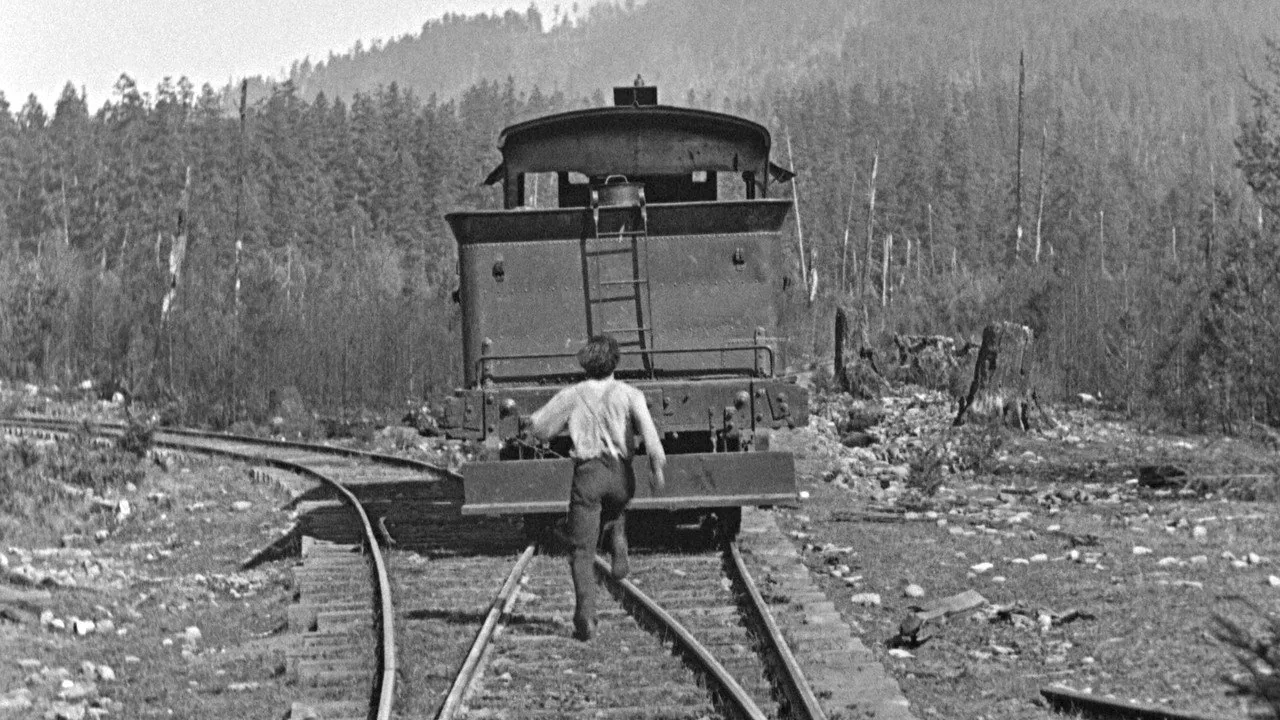
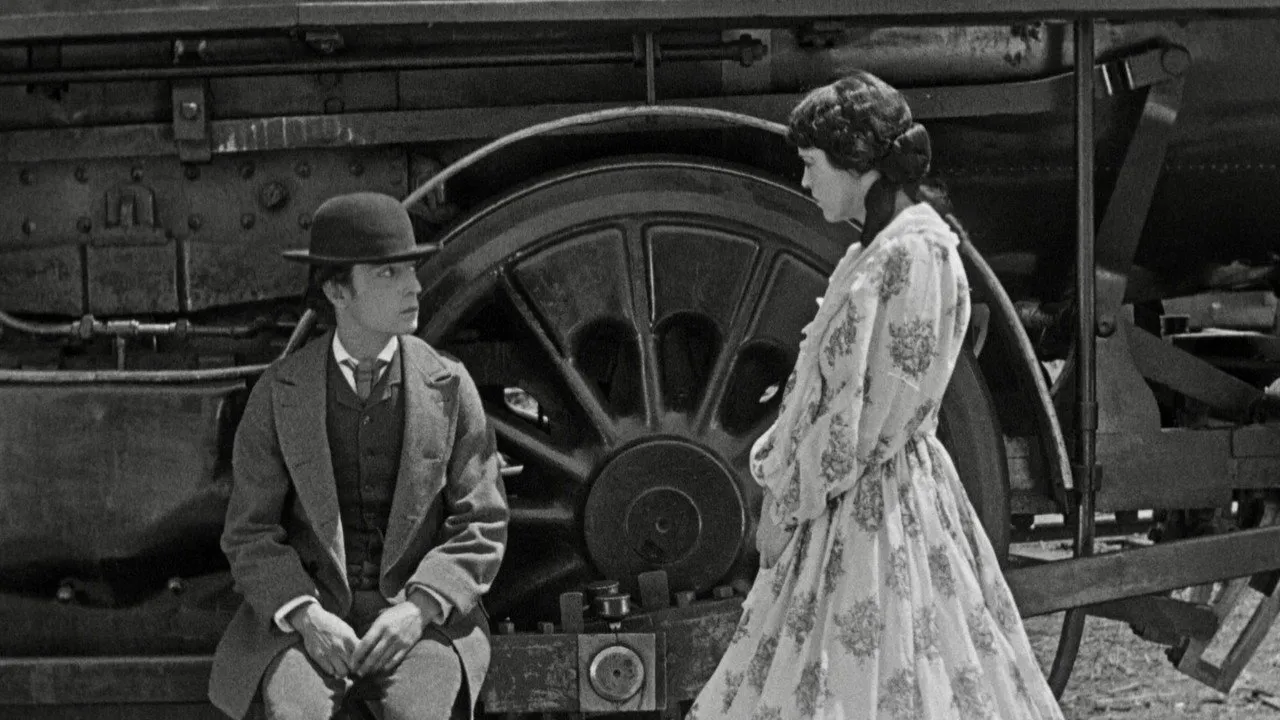
Union spies make off with The General with Annabelle aboard, and Johnnie gives chase.
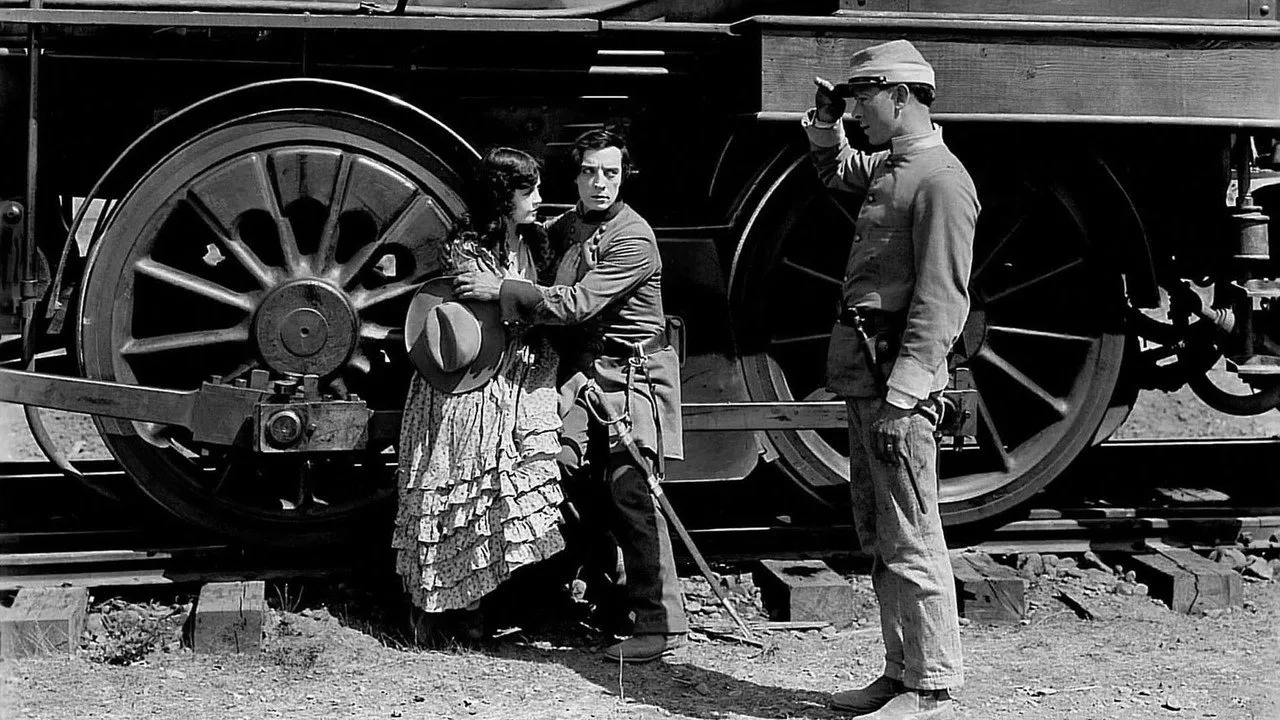
Johnnie tries to kiss Annabelle but keeps having to return the salutes of passing troops.
The pursuing locomotive drives onto the burning bridge, which collapses into the river.
Gallery
Stills: TMDb
True or false?
The film's story is based on a true event.
Connections in the catalog
In the great lists
| AFI · 100 greatest American films (2007) | 18th |
| AFI · 100 funniest American films (2000) | 18th |
A favorite of
| Orson Welles | In his view the greatest comedy ever; featured in his 1971 TV documentary series · Source ↗ |
Budget and box office
| Budget (1926) | $415,232 |
| Today's equivalent | ≈ $7.6 million |
| Box office | $474,264 in the US |
Adjusted for inflation using the US CPI
Technical details and shooting
| Image | Black and white |
| Languages | Silent |
| Release | 31 December 1926 in Tokyo; US release 5 February 1927 |
| Shooting | Cottage Grove, Oregon, from May 1926, for its old-fashioned railroads |
| Production | 18 freight cars arrived with cannons, rebuilt passenger cars, stagecoaches and houses |
| Fires | Sparks set forests and haystacks alight; each haystack cost $25 |
| Public domain | In the US since 1954, after its copyright was not renewed |
Wikipedia (EN) · Wikipedia (ES) · Wikiquote · Wikidata · IMDb · TMDb
Analysis prepared with AI assistance from these sources. Quotes are checked word for word against the original text. How we build these pages →