
Metropolis
| Director | Fritz Lang |
| Writer | Thea von Harbou, Fritz Lang |
| Cinematography | Karl Freund, Günther Rittau |
| Music | Gottfried Huppertz |
| Cast | Brigitte Helm, Alfred Abel, Gustav Fröhlich |
In a futuristic city, the rich live in skyscrapers and pleasure gardens while workers toil endlessly at the machines underground. Freder, son of the city's master, falls for Maria, a young woman who preaches among the workers, while an inventor builds a robot in her image to sow chaos.
| Copy | Complete · 150 of 150 min |
| Quality | SD |
| Version | German · No subtitles |
| Checked | 08/24/2026 |
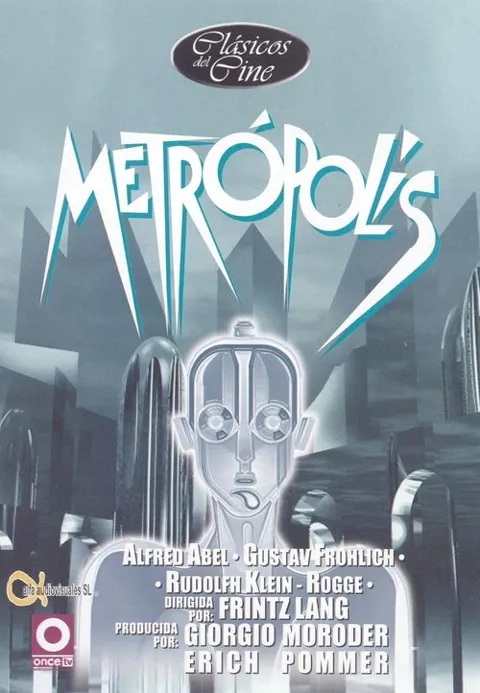
Pros
- The first film inscribed on UNESCO's Memory of the World Register (2001).
- Its sets and effects, such as the mirror-based Schüfftan process, shaped all later science fiction.
- The robot sculpted by Walter Schulze-Mittendorff is one of the 20th century's visual icons.
- 97% on Rotten Tomatoes and 98 out of 100 on Metacritic.
Cons
- Its story was called naïve; H. G. Wells described it as "silly".
- Its politics have been seen as simplistic.
- Long and dense: heavily cut after release, a near-complete version only exists since 2010.
- The budget ballooned from 1.5 to 5.3 million Reichsmarks and it lost money.
What the critics said
«Metropolis is one of the great achievements of the silent era, a work so audacious in its vision and so angry in its message that it is, if anything, more powerful today than when it was made.»
Roger Ebert · Source ↗
Argues that time has worked in its favor.
«Heavy going at times but startling set design and special effects command attention throughout.»
Leonard Maltin · Movie Guide · Source ↗
A fair summary: brilliant visually, more uneven as a story.
«Metropolis is a dark dream of the city of 2026, where the idle rich live in penthouses and play in rooftop pleasure gardens while the faceless workers toil in the machine caverns far, far below.»
Colin Greenland · Imagine · Source ↗
A curious coincidence: the film is set in the very year this page is being read.
«A visually awe-inspiring science fiction classic from the silent era.»
Rotten Tomatoes · consenso de la crítica · Source ↗
Today's consensus puts the visuals above the story.
Famous quotes
«There can be no understanding between the hand and the head unless the heart acts as mediator.»
Maria · PlayPhrase ↗ · QuoDB ↗
«Look! These are your brothers!»
Maria · PlayPhrase ↗ · QuoDB ↗
«Let's all watch as the world goes to the devil!»
The robot disguised as Maria · PlayPhrase ↗ · QuoDB ↗
«Death to the machines!»
The robot disguised as Maria · PlayPhrase ↗ · QuoDB ↗
Quotes: Wikiquote (CC BY-SA)
Famous scenes
After an explosion, Freder sees the great machine turn into a god devouring the workers.
On Fredersen's orders, Rotwang gives the robot Maria's likeness to discredit her among the workers.
The wrecked machines flood the workers' city and Maria tries to save the children.
The workers burn the false Maria at the stake. Lang insisted on real fire, and Brigitte Helm's dress caught alight.
Gallery
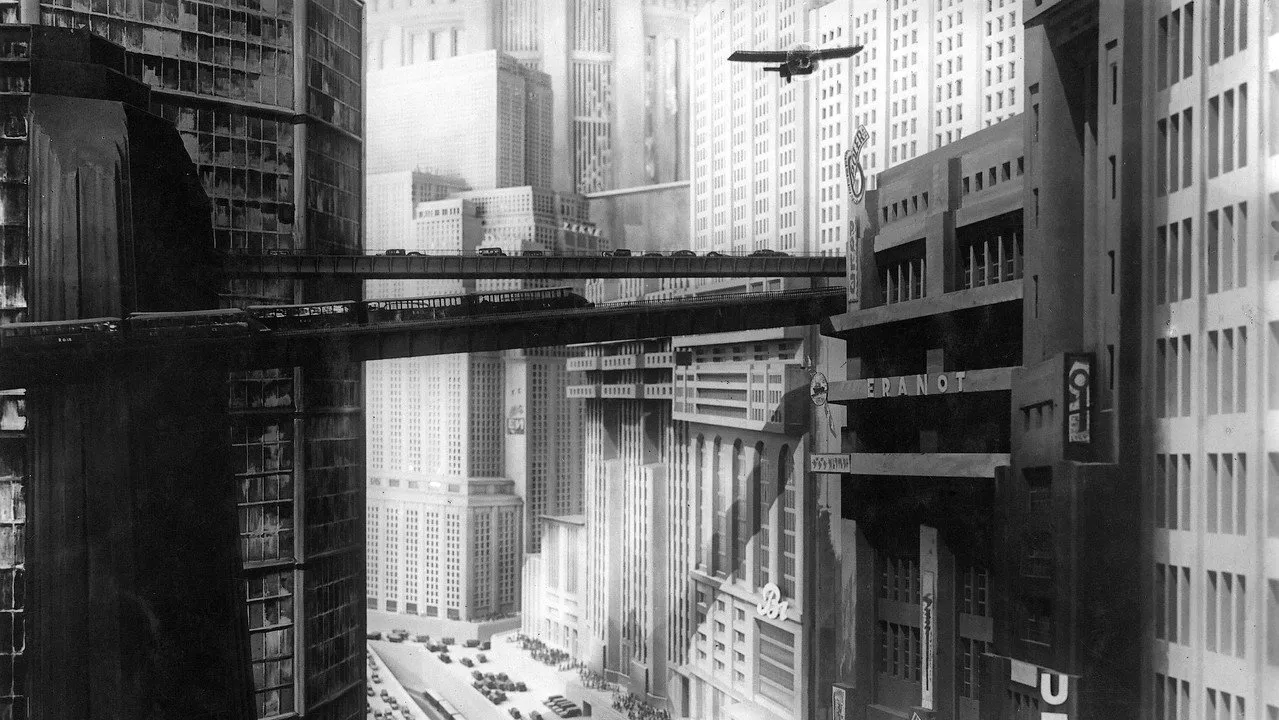
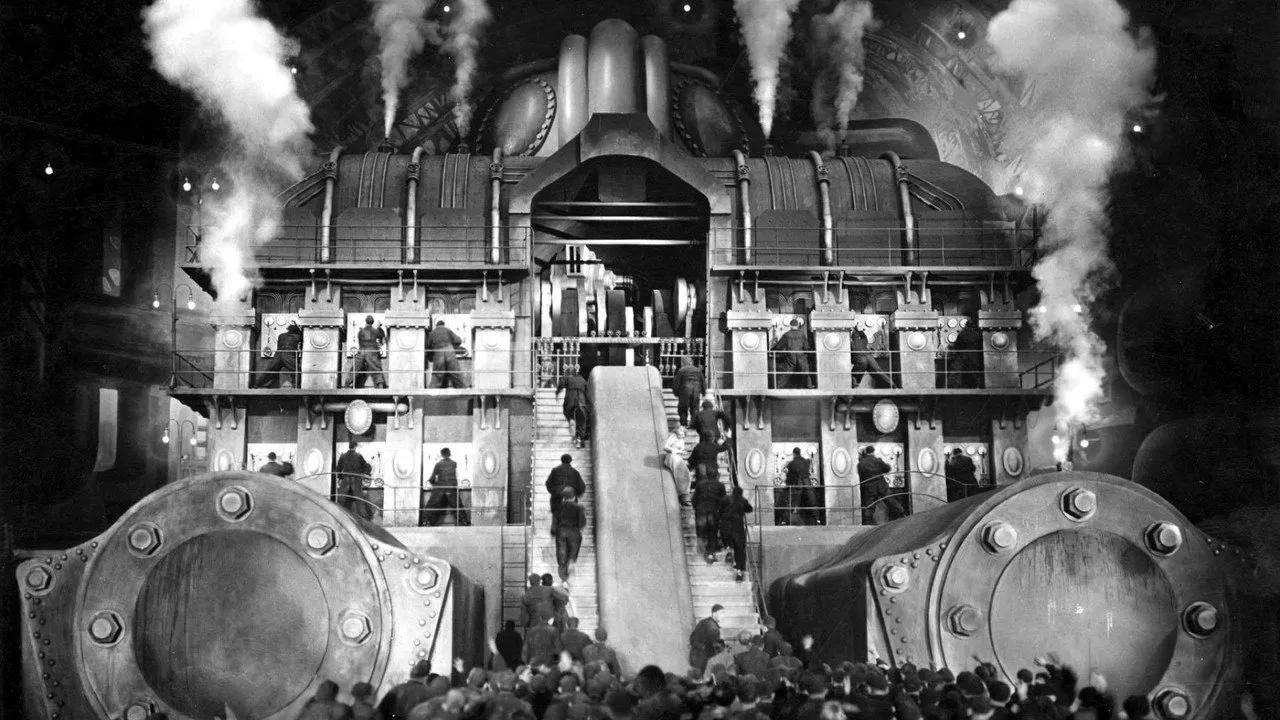
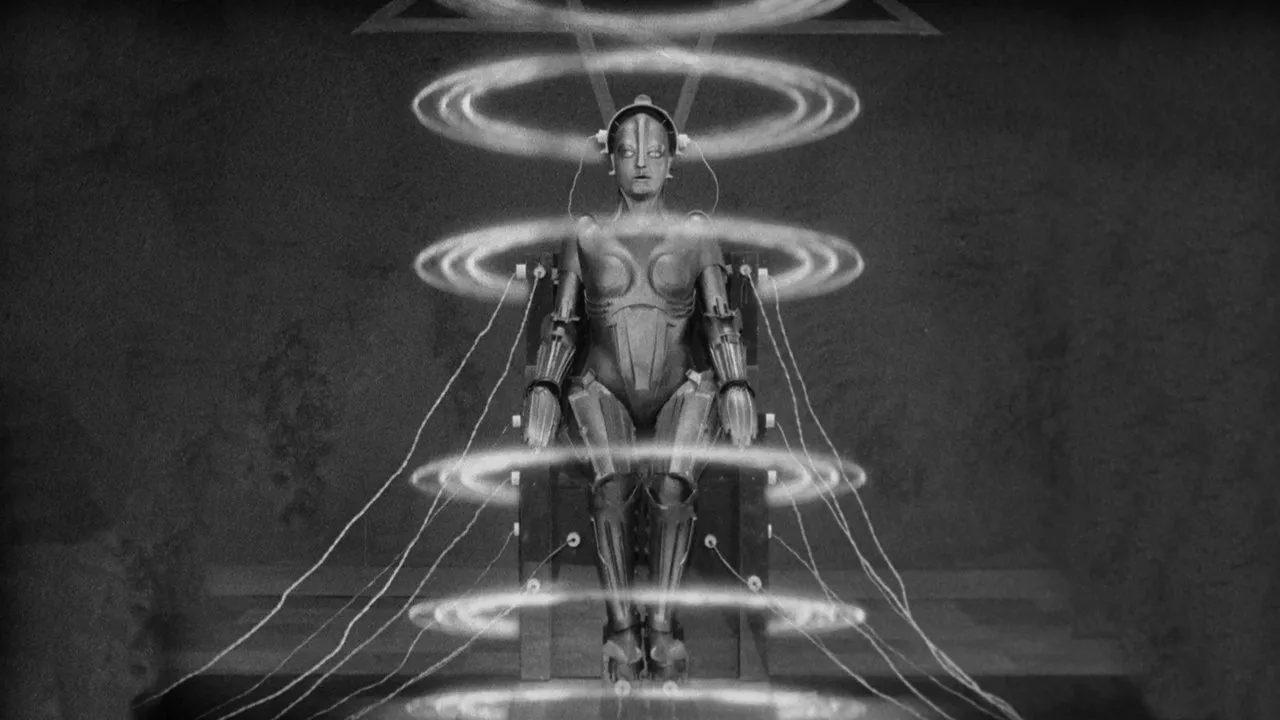
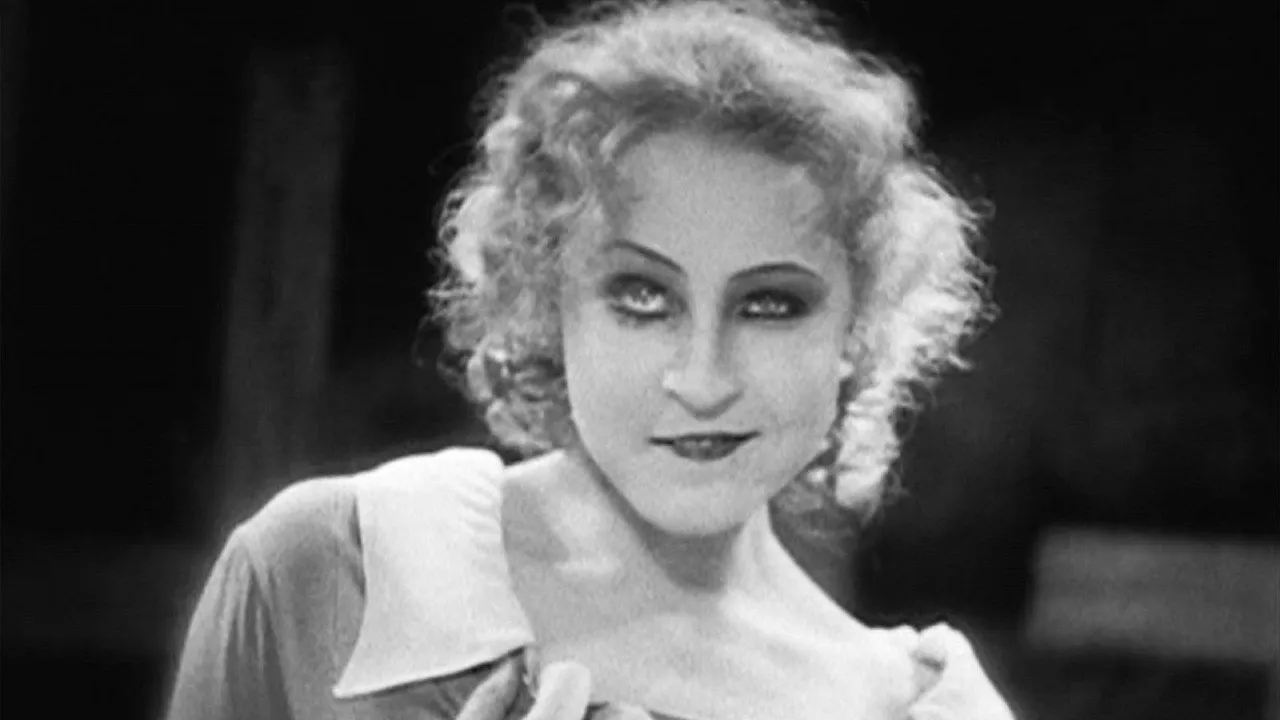
Stills: TMDb
True or false?
Part of the original footage was believed lost for decades, and it turned up in Buenos Aires.
Connections in the catalog
In the great lists
| Sight & Sound · critics' poll (2012 / 2022) | 35th / 67th |
| Empire · 100 best films of world cinema (2010) | 12th |
| The Guardian · best silent films (2013) | 6th |
| Martin Scorsese · 39 essential foreign films | Included |
Budget and box office
| Budget (1927) | 5,300,000 |
Adjusted for inflation using the US CPI
Technical details and shooting
| Image | Black and white |
| Languages | Silent |
| Shooting | 17 months, from May 1925 into 1926, at UFA's Babelsberg studios |
| Budget | From 1.5 to 5.3 million Reichsmarks (about €21 million today) |
| Effects | Eugen Schüfftan: miniatures, a swinging camera and the mirror-based Schüfftan process |
| Inspiration | Lang conceived it on first seeing New York's skyscrapers in October 1924 |
| Versions | Giorgio Moroder's rock-scored version (1984); 2001 reconstruction; near-complete 2010 version |
| Preservation | UNESCO Memory of the World (2001) |
Script and source material
| Based on | Metropolis, a novel by Thea von Harbou (1925), who co-wrote the screenplay |
Wikipedia (EN) · Wikipedia (ES) · Wikiquote · Wikidata · IMDb · TMDb
Analysis prepared with AI assistance from these sources. Quotes are checked word for word against the original text. How we build these pages →