
City Lights
| Director | Charles Chaplin |
| Writer | Charles Chaplin, Harry Carr, Harry Crocker |
| Cinematography | Gordon Pollock, Roland Totheroh |
| Music | Charles Chaplin |
| Cast | Charles Chaplin, Virginia Cherrill, Florence Lee, Harry Myers, Al Ernest Garcia |
The penniless Tramp falls in love with a blind flower girl who believes he is a millionaire. Meanwhile he befriends a real millionaire who only recognizes him when drunk, and he will do anything to pay for the operation that could restore her sight.
| Copy | Complete · 87 of 87 min |
| Quality | HD |
| Version | English · No subtitles |
| Checked | 08/24/2026 |
Pros
- For James Agee, its final scene is the greatest piece of acting ever filmed.
- Orson Welles called it his favorite film; Kubrick and Tarkovsky put it in their top tens.
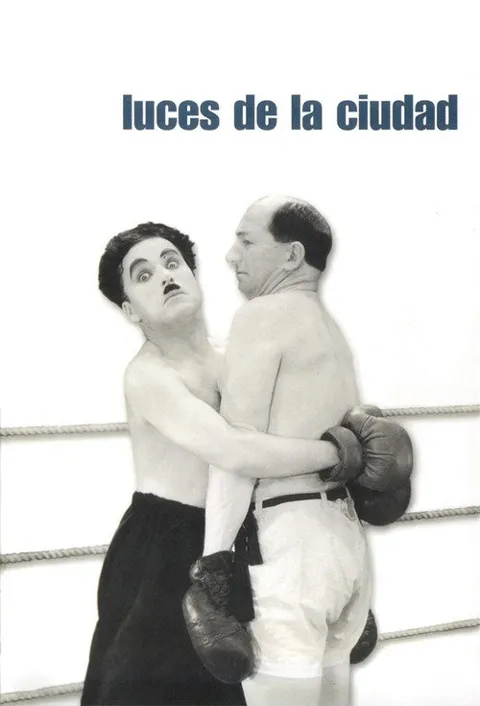
- It precisely blends physical comedy (the boxing match) with romantic melodrama.
- Chaplin's first self-composed score, with José Padilla's "La Violetera" as the flower girl's theme.
Cons
- Silent in 1931, when sound already ruled: some critics saw it as an anachronism.
- The Nation called it Chaplin's feeblest film and faulted its sentimentality.
- Variety said it wasn't Chaplin's best, though it praised some sequences.
What the critics said
«A film worked out with admirable artistry»
Mordaunt Hall · The New York Times, 1931 · Source ↗
New York critics valued how skillfully Chaplin kept silent cinema alive.
«Chaplin's feeblest»
Alexander Bakshy · The Nation, 1931 · Source ↗
The dissenting voice: he objected to the silent format and its sentimentality.
«Greatest single piece of acting ever committed to celluloid»
James Agee · Life, 1949 · Source ↗
He means the final scene, the most cited moment in all of Chaplin's work.
«He is the only person to have gone down into cinematic history without any shadow of a doubt.»
Andréi Tarkovski · 1972 · Source ↗
The Russian director placed it fifth among his ten favorite films.
Famous scenes
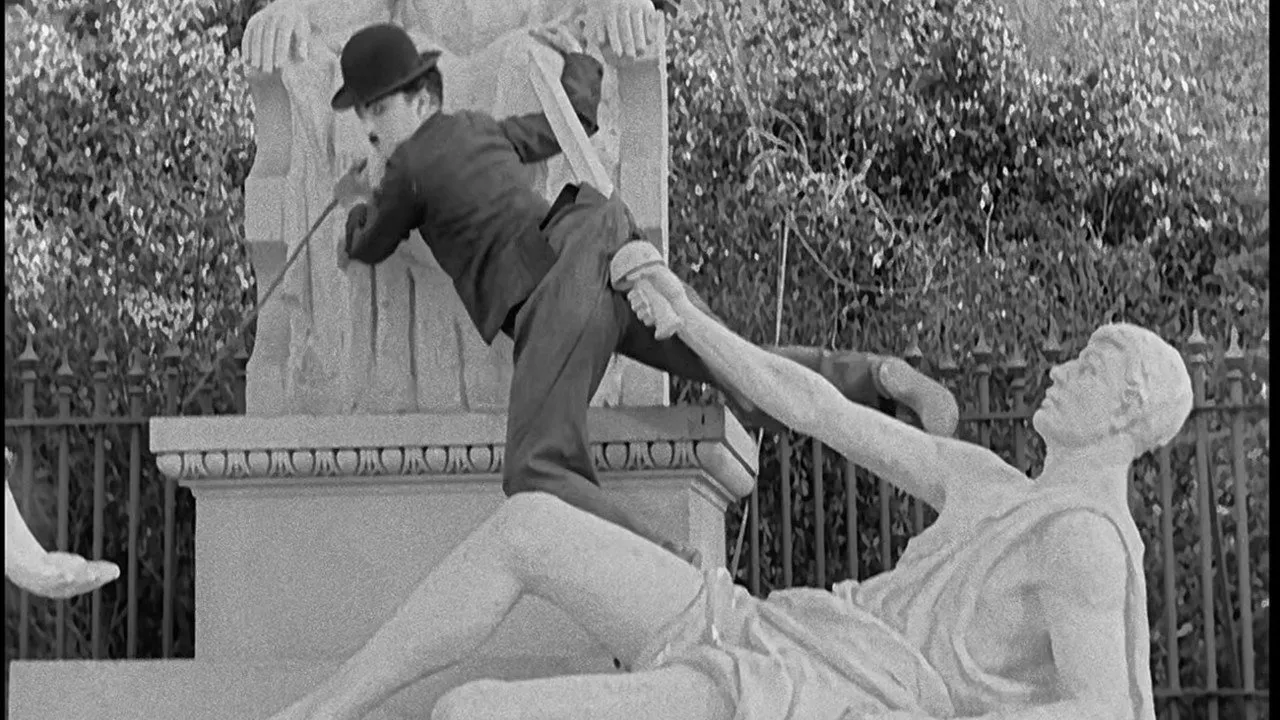
At a monument's unveiling, the cloth is lifted to reveal the Tramp asleep in the statue's lap.
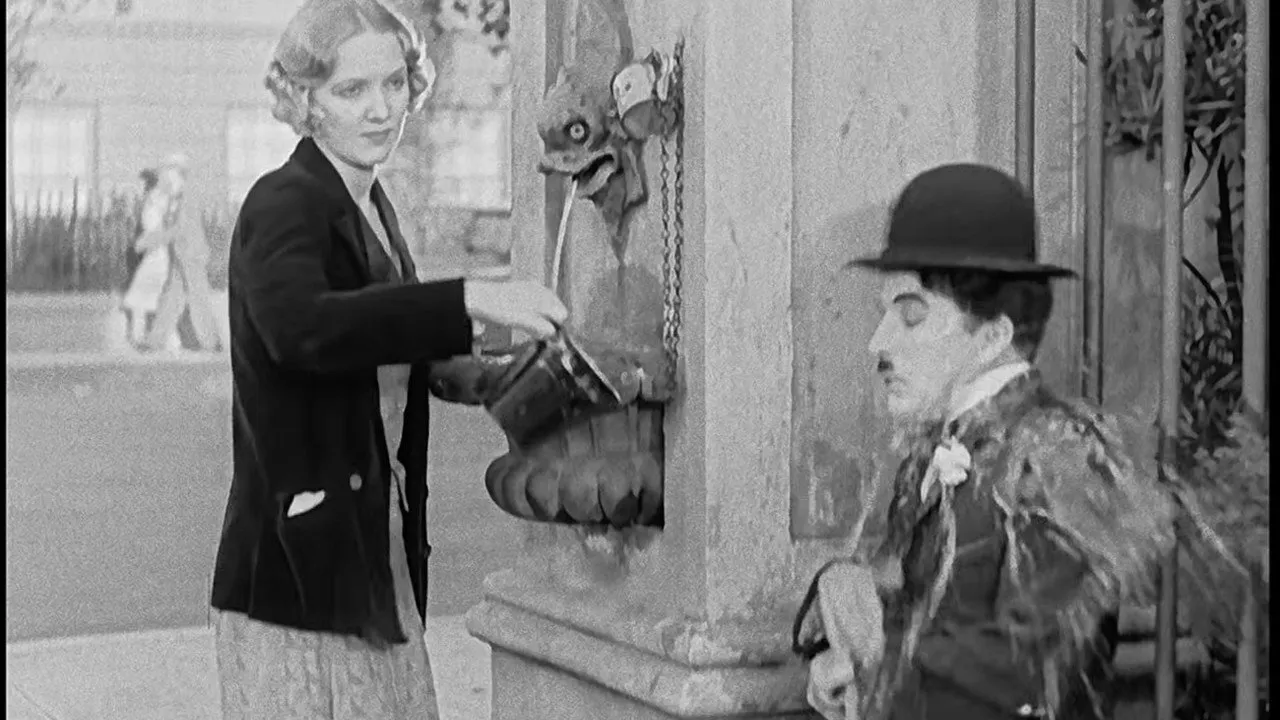
Hearing a car door close, the blind girl believes the Tramp is a rich man.
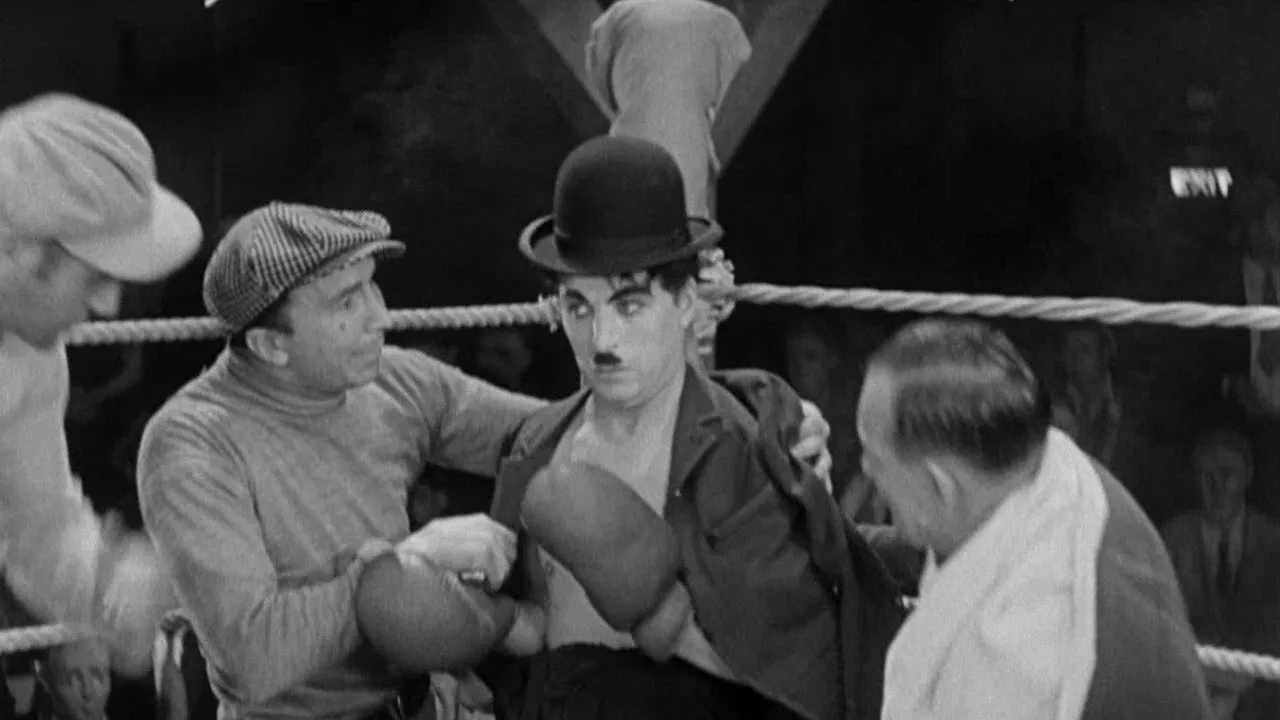
To raise money, the Tramp enters the ring and dodges his opponent with near-balletic choreography.
Her sight restored, the flower girl recognizes her benefactor by touching his hand. Chaplin's most famous ending.
Gallery
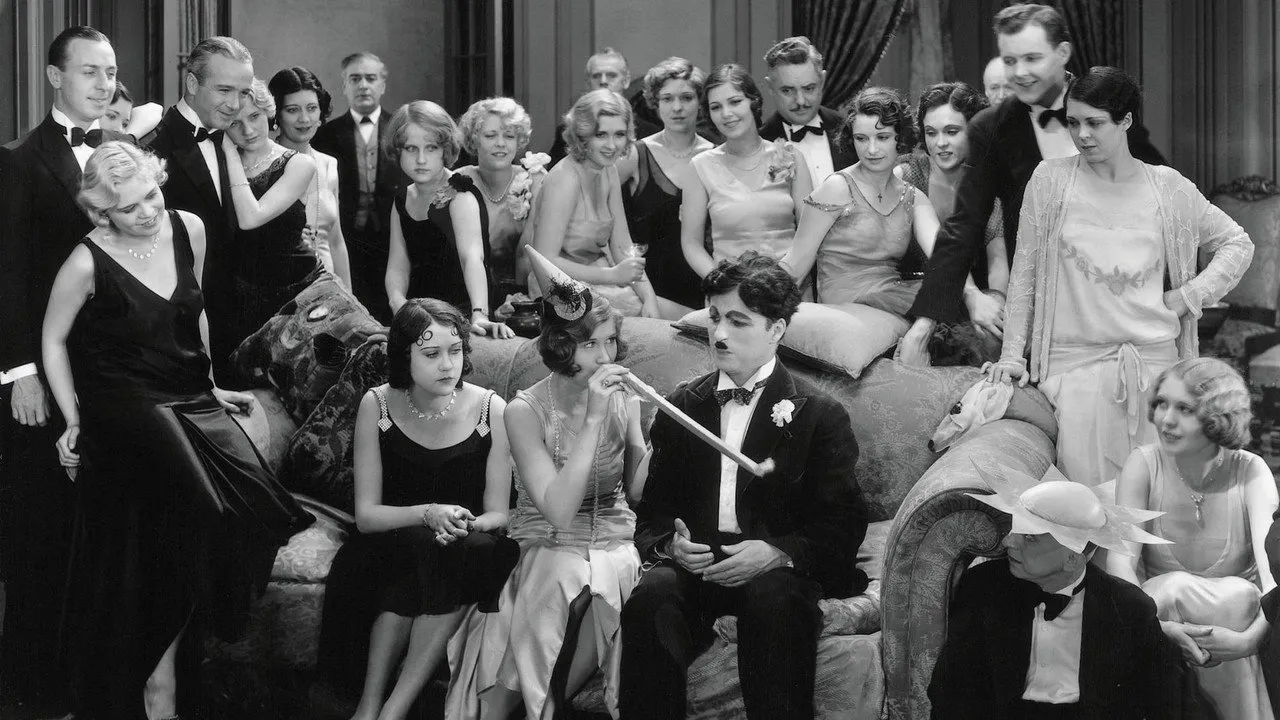
Stills: TMDb
True or false?
Chaplin fired Virginia Cherrill, the flower girl, during the shoot.
Connections in the catalog
In the great lists
| AFI · 100 greatest American films (1998 / 2007) | 76th / 11th |
| AFI · best romantic comedy (10 Top 10, 2008) | 1st |
| AFI · greatest love stories | 10th |
Budget and box office
| Budget (1931) | $1,500,000 |
| Today's equivalent | ≈ $31.8 million |
| Box office | About $2 million in US rentals |
Adjusted for inflation using the US CPI
Technical details and shooting
| Image | Black and white |
| Languages | Silent |
| Release | 30 January 1931, Los Angeles Theater, with Albert Einstein as guest of honor |
| Sound | No audible dialogue: synchronized score and sound effects |
| Music | Chaplin, with Arthur Johnston, in six weeks; his first score |
| Script | He began writing it in 1928, as talkies were taking over |
| Preservation | National Film Registry (1991) |
Wikipedia (EN) · Wikipedia (ES) · Wikidata · IMDb · TMDb
Analysis prepared with AI assistance from these sources. Quotes are checked word for word against the original text. How we build these pages →