
Andrei Rublev
| Director | Andrei Tarkovsky |
| Writer | Andrei Konchalovsky, Andrei Tarkovsky |
| Cinematography | Vadim Yusov |
| Music | Vyacheslav Ovchinnikov |
| Cast | Anatoliy Solonitsyn, Ivan Lapikov, Nikolay Grinko, Nikolay Sergeev, Irma Tarkovskaya |
In 15th-century Russia, amid Tatar raids, famine and power struggles, monk and icon painter Andrei Rublev travels the land. After witnessing the brutality of his time, he takes a vow of silence and stops painting, until a young bell-maker restores his faith in art.
| Copy | Shortened · 183 of 205 min |
| Quality | HD |
| Version | Russian · No subtitles |
| Checked | 08/24/2026 |
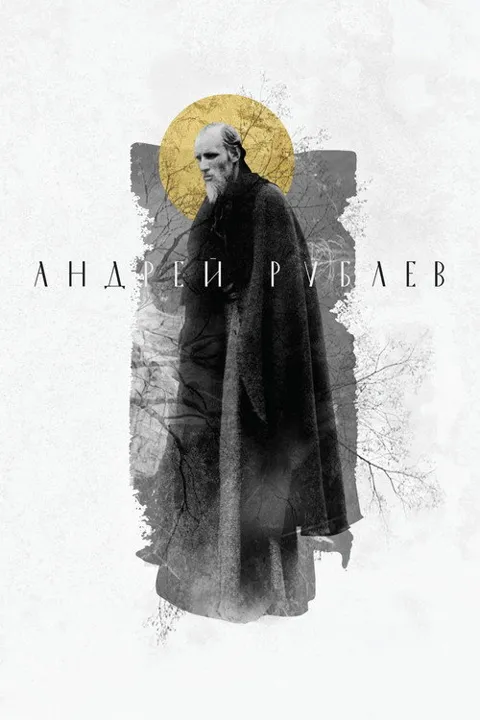
Pros
- Now seen as one of the greatest films ever, ranking high in Sight & Sound polls.
- International critics' (FIPRESCI) prize at Cannes in 1969.
- Its epilogue, the only part in color, shows Rublev's real icons after three hours of black and white.
- 96% on Rotten Tomatoes.
Cons
- Its scenes of violence, torture and cruelty to animals sparked controversy.
- Goskino demanded cuts for its length, negativity, violence and nudity.
- It opened in New York in 1973 missing another 20 minutes, and Time compared it unfavorably to Doctor Zhivago.
What the critics said
«Andrei Rublev is a cerebral epic that filters challenging ideas through a grand scope -- forming a moving thesis on art, faith, and the sweep of history»
Rotten Tomatoes · consenso de la crítica · Source ↗
Today's consensus stresses its intellectual ambition.
«Andrei contains some of the most authentic historical reality I have seen on screen with lavishness, intensity, and sweep»
Stanley Kauffmann · The New Republic · Source ↗
He praises its historical authenticity.
Famous scenes
In the prologue, a man named Yefim flies tethered to a hot air balloon over a river.
The Tatars, allied with the Grand Prince's brother, storm the Vladimir church painted by Andrei.
Young Boriska, son of a bell-maker who died of plague, takes on casting a huge bell.
Gallery
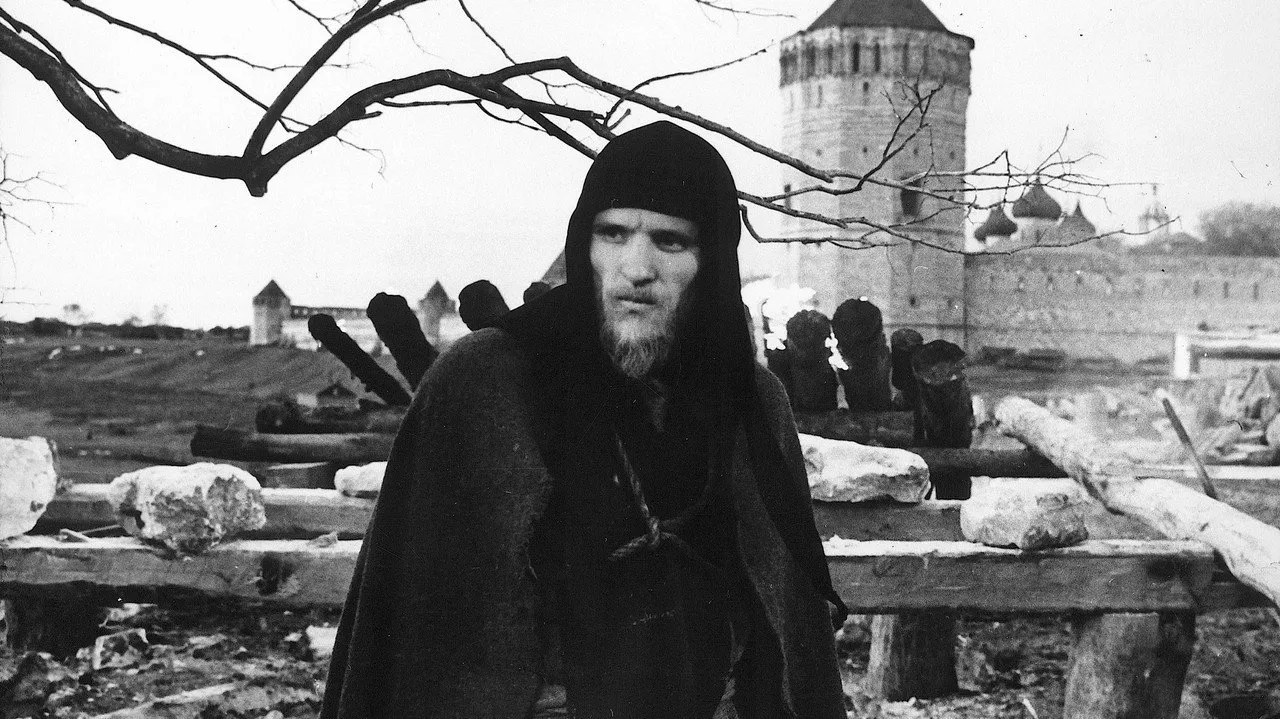
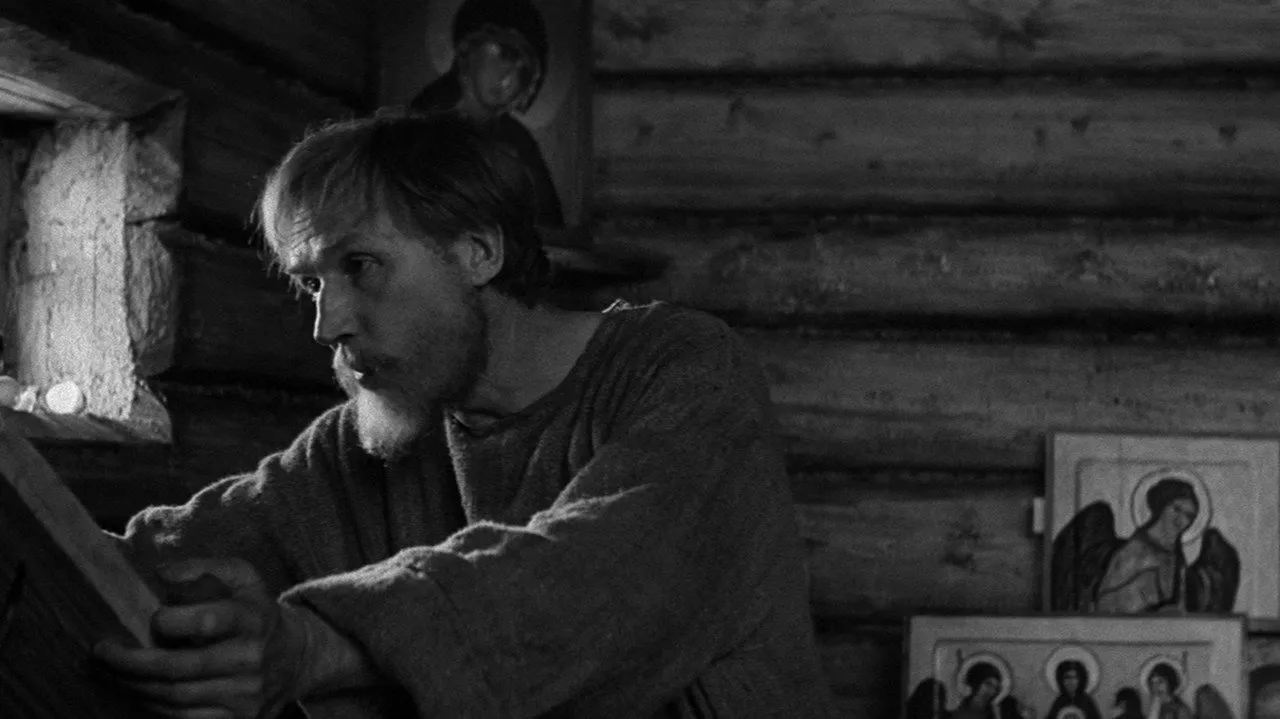
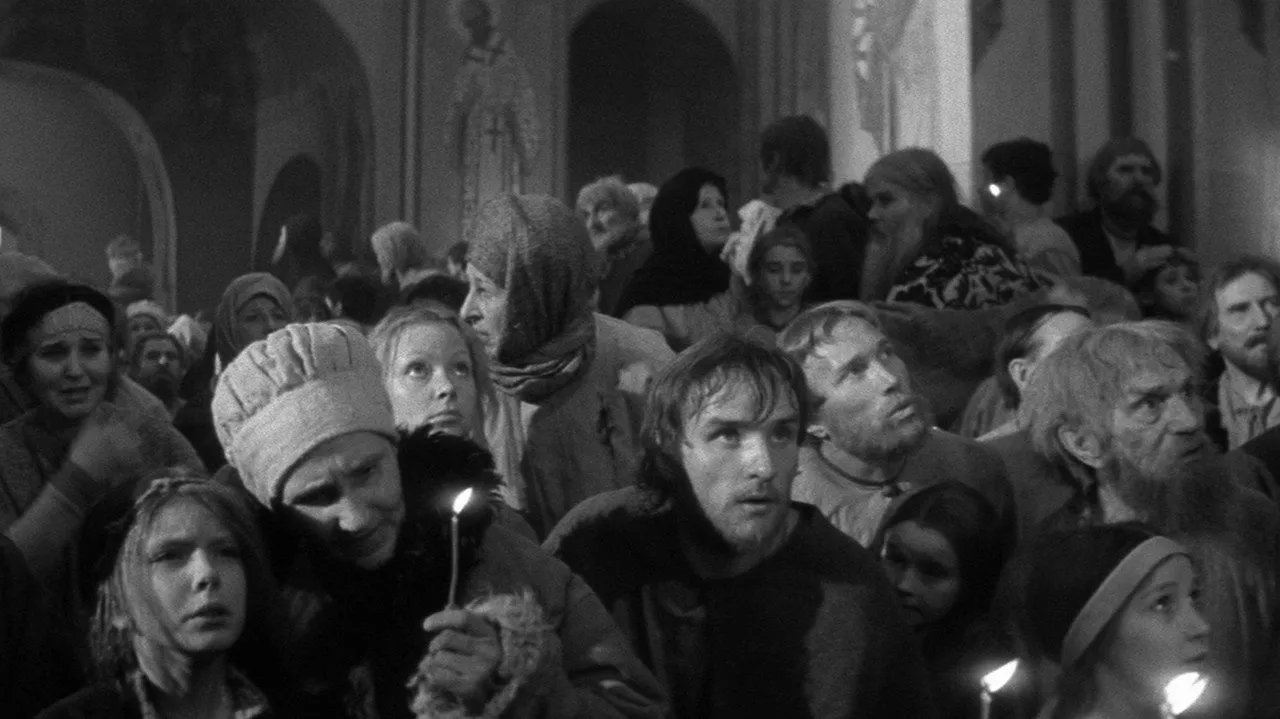
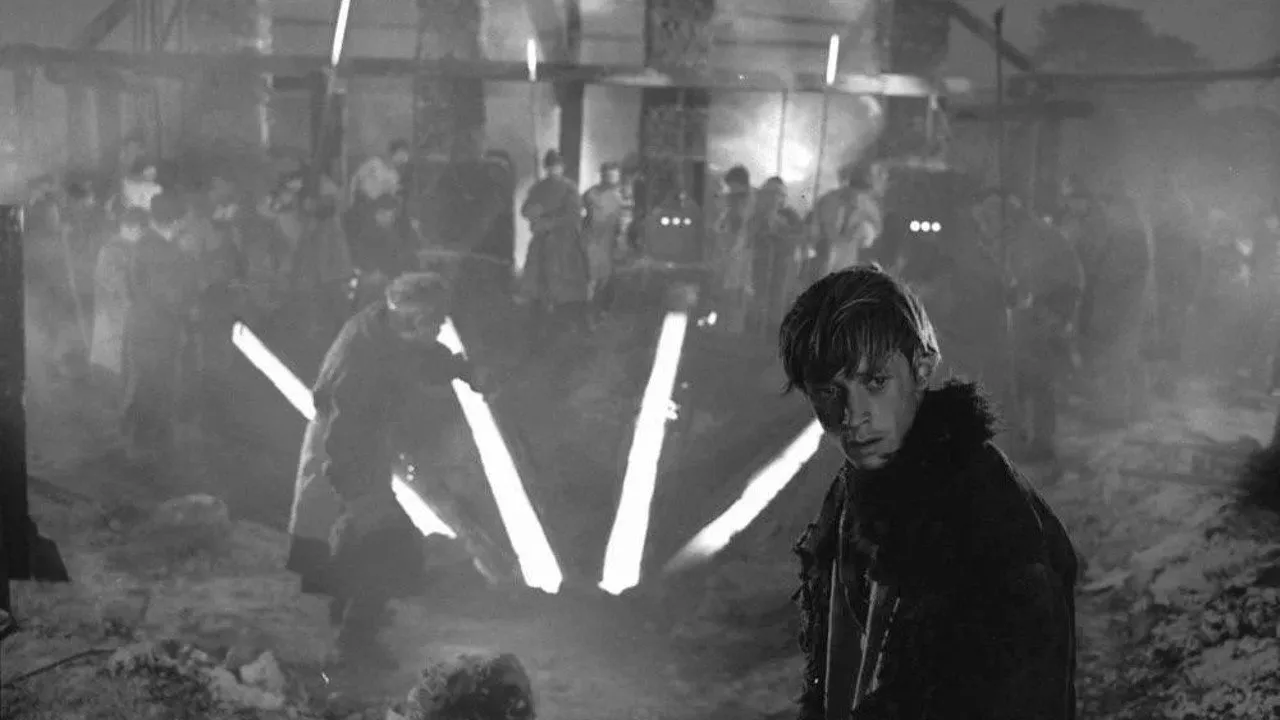
Stills: TMDb
True or false?
The color epilogue shows icons painted for the film.
Connections in the catalog
Awards
| FIPRESCI Prize, Cannes Film Festival | 1969 |
Budget and box office
| Budget (1966) | 900,000 |
Adjusted for inflation using the US CPI
Technical details and shooting
| Image | Black and white |
| Languages | tt, Russian, Italian |
| Shooting | Moscow, Russia |
| Versions | The Passion According to Andrei (205 min, 1966) and the 185-min version |
| Release | A single screening at Moscow's Dom Kino in 1966; censored Soviet release in 1971 |
| Budget | Cut from 1.6 to 1 million roubles (War and Peace cost 8.5 million) |
| Cannes | Shown out of competition under Soviet pressure |
Wikipedia (EN) · Wikipedia (ES) · Wikidata · IMDb · TMDb
Analysis prepared with AI assistance from these sources. Quotes are checked word for word against the original text. How we build these pages →